Abbey Road Studios (formerly known as EMI Studios) is a
recording studio at 3 Abbey Road, St John's Wood, City of
Westminster, London, England.[1] It was established November
1931 by the Gramophone Company, a predecessor of British
music company EMI, which owned it until Universal Music took
control of part of EMI in 2012.
Abbey Road Studios is most notable as being the 1960s' venue for
innovative recording techniques adopted by the Beatles, Pink Floyd, the Hollies, Badfinger and others. One of its earliest world-famous-artist clients was Paul Robeson, who recorded many of his best-known songs there.
Towards the end of 2009, the studio came under threat of sale to
property developers. However, the British Government protected
the site, granting it English Heritage Grade II listed status in 2010,
thereby preserving the building from any major alterations.
Starting in 1957, John Lennon and several of his friends
played in a British band called the Quarrymen. Over the next
few years, the members of the band changed, and by 1960,
the band was called The Beatles. They did not have their first
hit until 1962. their song, "Please Please Me", reached the
number 1 position on the British charts. This was the first of a
record 15 British number 1 singles.
Originally a nine-bedroom Georgian townhouse built in 1831 on
the footpath leading to Kilburn Abbey, the building was later
converted to flats where the most flamboyant resident was Maundy
Gregory.
In 1931, the Gramophone Company acquired the premises and
converted it into studios. Pathé filmed the opening of the studios
when Sir Edward Elgar conducted the London Symphony
Orchestra in recording sessions of his music. In 1934,
inventor of stereo sound, Alan Blumlein, recorded Mozart's Jupiter
Symphony which was conducted by Sir Thomas Beecham at the
studios.
Abbey Road Studios is closely associated with the Beatles, who
recorded almost all of their albums and singles there between 1962
and 1970 using the four-track REDD mixing console designed by
Peter K. Burkowitz. The Beatles named their 1969 album
Abbey Road, after the street where the studio is located.
The studio was renamed Abbey Road Studios in 1970 after the
Beatles album had made it famous. Iain Macmillan took the
album's cover photograph outside the studios, with the result that
the nearby zebra crossing has become a place of pilgrimage for
Beatles fans. It has been a tradition for visitors to pay homage to
the band by writing on the wall in front of the building even
though it is painted over every three months. December 2010,
the zebra crossing at Abbey Road was given a Grade II listed
status.
Pink Floyd recorded most of their late 1960s to mid-1970s albums
here, returning only in 1988 for mixing and overdubbing
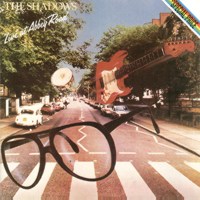
subsequent albums. The Shadows named their Live at Abbey Road album after the
studio, with the cover spoofing the Beatles' album.
Abbey Road Studios is a five to ten-minute walk from St. John's
Wood tube station. From central London, it is accessible using the
Jubilee line.
